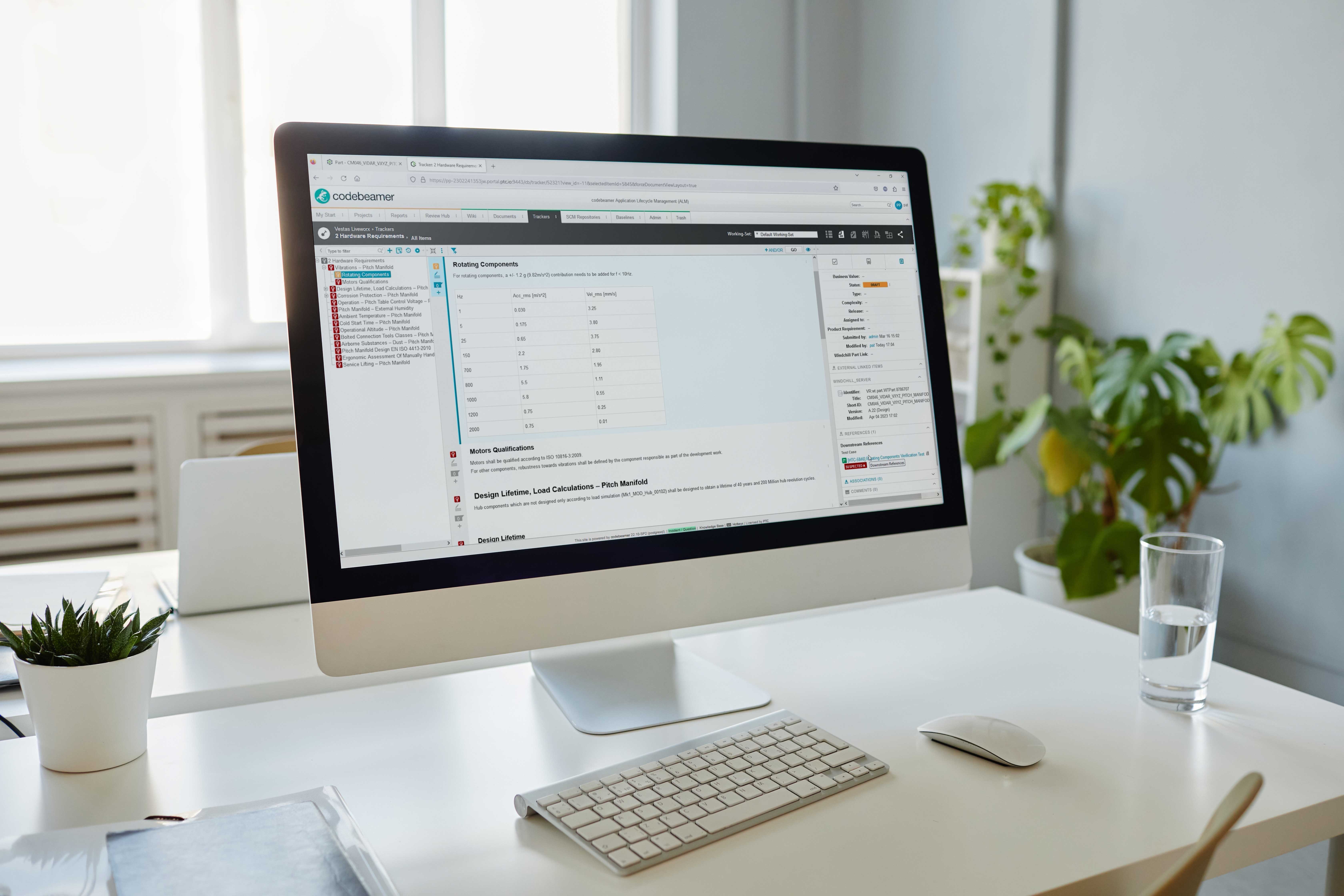
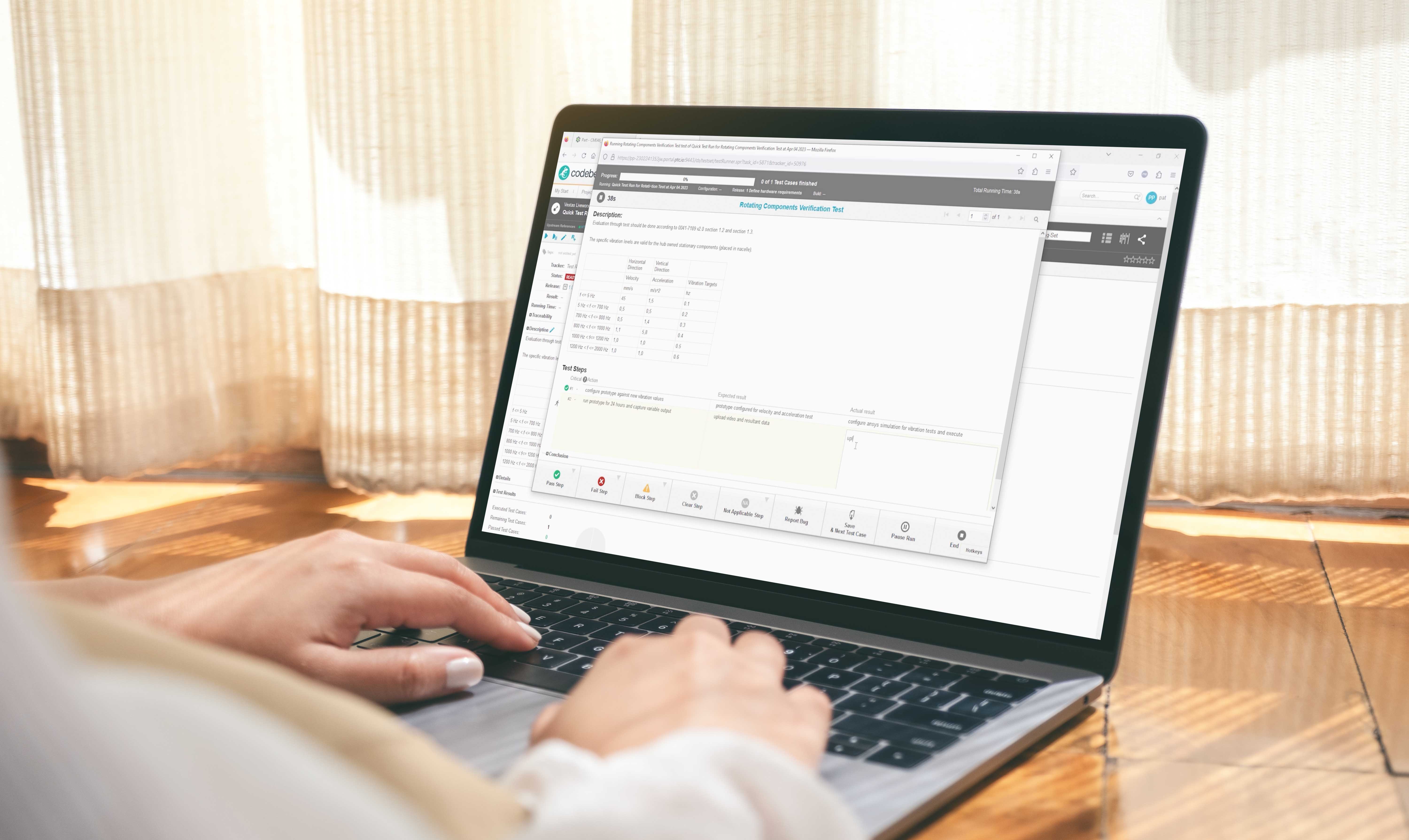
Build better software faster by keeping your teams connected and your data fully traceable.
What is application lifecycle management (ALM)?
Application lifecycle management (ALM) is the process of managing software from concept to retirement. It connects every development phase into a single workflow. This process integrates initial requirements, design, coding, testing, and ongoing maintenance.
Why is ALM important?
Modern software has too many moving parts to manage with basic spreadsheets and scattered tools. ALM brings separate teams together, helping companies track changing requirements, catch security risks early, and keep control of their software projects.
Features and functionality
Structured XML authoring
Create compliant content using XML authoring tools built for complex layouts. Writers can easily produce consistent, reusable content that meets strict industry standards like DITA and S1000D.
Component-based management
Manage your information as small, reusable blocks rather than giant, standalone files. This makes updates simple, improves version control, and keeps manuals and training guides completely uniform.
Multi-format publishing
Turn a single content source into multiple outputs like PDFs, web pages, online portals, and mobile views. Automated workflows handle the formatting for you, protecting your branding without manual tweaking.
Engineering data integration
Link your documents directly to CAD models and product structures. When a design changes, your documentation stays aligned automatically, reducing errors and keeping text accurate.
Ready to modernise your technical publications?
Modern manufacturers need more than basic text editors. You need a setup that connects content to engineering data and simplifies teamwork. Arbortext provides the foundation for scalable, efficient technical communication that drives operational success.
Built for complex product environments
Arbortext is trusted in highly regulated industries where documentation accuracy is non-negotiable. Aerospace, defence, heavy machinery, and life sciences companies use it to manage complex content while staying compliant across global operations.
Frequently Asked Questions
1. What is the difference between ALM and PLM software?
PLM manages physical products from initial design to manufacturing. ALM focuses strictly on the software, code, and digital logic. Together, they help organizations manage their complete product portfolio.
2. What is the difference between SDLC and ALM?
The software development lifecycle (SDLC) focuses on the technical phases of building software. ALM is a broader discipline. It covers everything from initial business planning to final software retirement, placing SDLC under its canopy.
3. What is the difference between ALM and DevOps?
ALM provides a centralized platform to manage the entire lifecycle, including requirements, design, and testing. DevOps is a delivery approach focused on speed and automation. It specifically breaks down barriers between development and operations teams.
4. How does ALM support regulated industries?
Regulated fields have strict rules for safety-critical products. ALM provides a comprehensive governance framework. It automatically tracks the rigor of your development process to help meet standards like ISO 26262, IEC 62304, and FDA regulations.
5. Which industries need ALM tools the most?
ALM is essential for high-stakes industries like automotive, aerospace, defence, medical devices, and electronics. In these sectors, a software error can cause serious safety or financial problems.
6. Is ALM only for traditional waterfall teams?
No. While ALM originally supported waterfall, modern platforms are process-agnostic. Codebeamer is custom-built to support Agile, Scrum, V-Model, or hybrid processes, letting teams work the way they prefer.
7. How does ALM improve teamwork?
It replaces messy emails and scattered spreadsheets with a single shared platform. This lets requirements managers, developers, and testers work from the exact same information in real time.
8. Can Codebeamer connect with my current tools?
Yes. Codebeamer features an open architecture. It easily plugs into common software tools you already use, such as Jira, Git, Jenkins, MATLAB Simulink, and IBM DOORS.
9. How does ALM help with compliance audits?
The system automatically tracks every decision, test result, and approval along the way. This enforces electronic signatures and gives you instant, audit-ready reports without manual paperwork.